Labels
Thursday, February 28, 2013
| | | 0 comments
I've noticed recently that people tend to throw around the word "racist" quite lightly and often in jest.

Knowing Numbers
Monday, February 25, 2013
| | | 0 comments
Each time I go to a certain taco stand, the cashier tells me my number in English then in Spanish. The people who give you your food only speak Spanish. [Because I'm white?]
Empowerment
Sunday, February 24, 2013
| | | 0 comments
Before you read this post, visit this website and read post #104 about Malala Yousafzai.
Her name may or may not sound familiar, but her story was played and replayed for days on CNN. The whole world heard about this shooting and waited for days to find out if she would survive. Miraculously, she did, and she continues to fight for a cause that she believes in.
She is not silent.
In class we discussed how silence results in the perpetuation of unjust situations and traditions. In Malala's culture, women are typically uneducated. Gender roles are strict, yet this young girl realizes that women have brains too. Rather than letting the system keep going, she spoke out.
Malala's attack is a prime example of why many people choose to remain silent, why many people choose to take the path of least resistance. Malala's story has played out numerous times throughout history to a variety of people in a variety of circumstances. They are the result of knowing that something is wrong and trying to help others see that injustice. They are men and women of the utmost courage, whom all of us should aspire to be like.
I know that even though I can openly speak about these events and discuss these injustices, many people cannot. Society does not often allow it. In America we value individualism. We are taught to speak our minds, and movements for various issues stride forward each day. Can you imagine living in a society where you literally risk your life by going against the grain and taking a position? We cannot take this ability to initiate change for granted. People like Malala risk their lives while we risk much different, and arguably smaller, consequences.
Nonetheless, we need to strive to not take the path of least resistance. We need to, as Gandhi said, be the change. We need to exercise our freedoms to speak out, make change, and use people like Malala as our inspiration to move forward.
Human Machines
Friday, February 15, 2013
| | | 3 comments
On Wednesday during class, we did a few activities as we do every week. What fascinated me the most was called the "Human Machine." We did two rounds. Each began with one person. Then a second person would add on to the machine. Then a third. Then a fourth, and so on. In the first round, our goal was to add on an opposing action. In the second round, we added a complementary action.
The variation between these two machines was profound! I did not expect such a difference to exist. The first machine was large and spread out. People were doing all sorts of crazy motions that made the system seem disjointed, yet it was easy to find an action to go against. Everyone has a different view of an 'opposing' action, whether that be doing the opposite, doing nothing, or rejecting it.
The second machine was beautiful. I was the first person to begin, so I put my hands on my hips and swayed. People added on to my left, right, and back; each of them swayed with me in a sort of harmonious conjunction. Others helped by clapping so that we would have a rhythm, moving their hands as if they were a musical director coordinating our movements, or physically joining us together so we could move collaboratively.
I was amazed at these machines, for they symbolize different environments or systems one may encounter in social work practice. A system can be built around opposing viewpoints being forced to work together.

A system could also be built upon common principles that help the machine work harmoniously (i.e. a religious group).
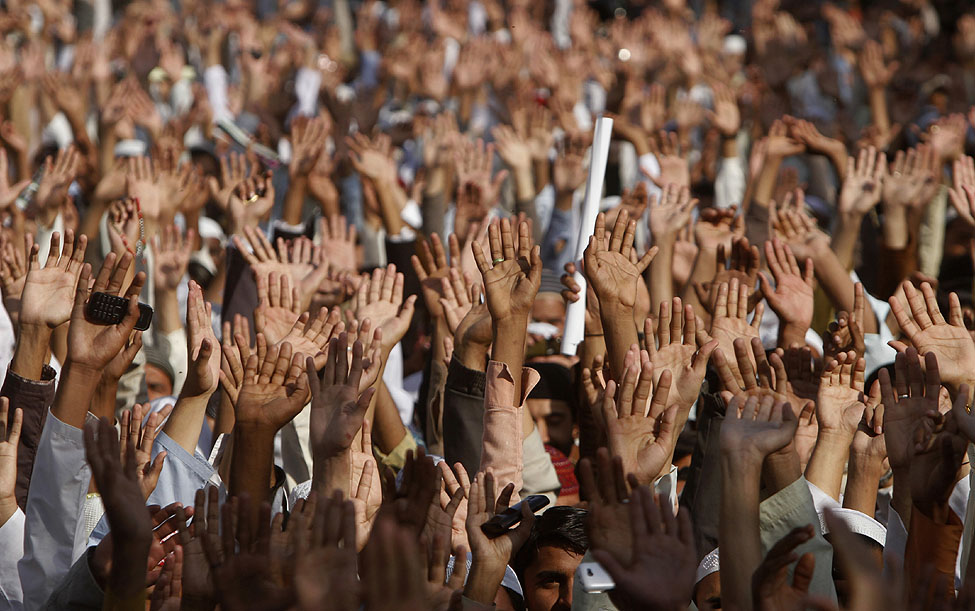
Even though it is much easier to go on the defensive side of things and go against what may not appease you, it is worth it in the end to ponder a complementary solution that will result in a smooth operation. In social work we must make choices both on a micro and macro scale, whether we work with families or social movements.
Collaboration will not always be harmonious. Most people will take the path of least resistance. Yet it is our responsibility as social workers to be agents of change and to think about solutions that will create more congenial machines.
Accessibility
|
|
|
0
comments

A Big White Club
Friday, February 8, 2013
| | | 0 comments
Someone pointed out that they did not join one of the organizations I am in because they heard that it is "a big white club."
Yes, I Mind
|
|
|
0
comments
What constitutes an open mind? How does one define oneself as an 'open-minded' person?


The other day a group of friends and I were discussing our frustrations with 'closed-minded' people. The term began to be associated in our conversation with disengagement and unwillingness to consider or respect another person's point of view.
Then, the conversation evolved into a discussion of the origins of one person's closed-mindedness and the associations our society has with the labels 'open-' and 'closed-' minded. Like the man in the second image, a lot of people believe that they are 'open-minded' simply because they may listen to another person's viewpoint. In reality, they just want the other person to conform to their views.
I immediately knew that I wanted to write about this conversation in my blog. It may not seem directly related to social justice on the surface-level, but it is significant when we consider the reactions of people in our society upon mention of an issue that we have a certain stance on.These reactions often stem from the way a person has been raised in conjunction with whether they are a generally assertive person. I found it interesting when the topic of Christianity came into play. Our train of thought was such:
Open-mindedness is often associated with liberalism,
Closed-mindedness is often associated with conservatism.
Merriam-Webster defines conservative as "tending or disposed to maintain existing views, conditions, or institutions."
In the case of Americans, these 'existing views,' and in turn our accepted social norms, equate to 'traditional values.' I was quick to realize the point that 'traditional values' are often in line with values Christianity promotes. I was raised Christian, so maybe that explains why I had never really thought of this before. [If you are not Christian, I would LOVE to hear your opinion!!]
When someone sneezes, we say "God bless you." Many people in the south say "Bless your heart." Our pledge of allegiance says "one nation, under God." Granted the pledge has come under fire for lack of separation of church and state, all of these phrases are generally accepted and not questioned.
Certain people in the group disagreed with me, saying that their religious beliefs have nothing to do with being open- or closed-mined. In some cases, I agree. I then pointed out that the true issue rests in how often we take for granted that many aspects of our culture align with Christian beliefs. If we lived in a country where Christianity was not the dominant religion and said "God bless you" when someone sneezes or told somebody that we would pray for them during a hard time, we would not get the same reaction from those around us.
This is yet another privilege that many of us take for granted. I believe that we need to open our minds and examine the ways in which our interactions with people are rooted in a certain comfort in knowing that it is okay to display Christianity without fear of persecution.


There are obviously different ways to depict an open mind.
The other day a group of friends and I were discussing our frustrations with 'closed-minded' people. The term began to be associated in our conversation with disengagement and unwillingness to consider or respect another person's point of view.
Then, the conversation evolved into a discussion of the origins of one person's closed-mindedness and the associations our society has with the labels 'open-' and 'closed-' minded. Like the man in the second image, a lot of people believe that they are 'open-minded' simply because they may listen to another person's viewpoint. In reality, they just want the other person to conform to their views.
I immediately knew that I wanted to write about this conversation in my blog. It may not seem directly related to social justice on the surface-level, but it is significant when we consider the reactions of people in our society upon mention of an issue that we have a certain stance on.These reactions often stem from the way a person has been raised in conjunction with whether they are a generally assertive person. I found it interesting when the topic of Christianity came into play. Our train of thought was such:
Open-mindedness is often associated with liberalism,
Closed-mindedness is often associated with conservatism.
Merriam-Webster defines conservative as "tending or disposed to maintain existing views, conditions, or institutions."
In the case of Americans, these 'existing views,' and in turn our accepted social norms, equate to 'traditional values.' I was quick to realize the point that 'traditional values' are often in line with values Christianity promotes. I was raised Christian, so maybe that explains why I had never really thought of this before. [If you are not Christian, I would LOVE to hear your opinion!!]
When someone sneezes, we say "God bless you." Many people in the south say "Bless your heart." Our pledge of allegiance says "one nation, under God." Granted the pledge has come under fire for lack of separation of church and state, all of these phrases are generally accepted and not questioned.
Certain people in the group disagreed with me, saying that their religious beliefs have nothing to do with being open- or closed-mined. In some cases, I agree. I then pointed out that the true issue rests in how often we take for granted that many aspects of our culture align with Christian beliefs. If we lived in a country where Christianity was not the dominant religion and said "God bless you" when someone sneezes or told somebody that we would pray for them during a hard time, we would not get the same reaction from those around us.
This is yet another privilege that many of us take for granted. I believe that we need to open our minds and examine the ways in which our interactions with people are rooted in a certain comfort in knowing that it is okay to display Christianity without fear of persecution.
Subscribe to:
Posts (Atom)

